Small Gains and Big Losses: Understanding and Treating Online Gambling Addiction within the Emerging Adult Population
This interactive presentation is designed to educate attendees about the ways that online gambling is impacting the emerging adult (18 – 29) population and how counselors and other mental health and addiction treatment professionals can recognize risk factors and signs, and best meet treatment needs. Marchia et al. (2020) highlight several developmental characteristics of the emerging adult population that contribute to the increased risks, which will be discussed in this presentation. Online gambling is at an all-time high, not only as a result of legal changes within the past several years that allowed for easier access but also loopholes that provide access to those under the age of 21. In addition, mandated social distancing as a result of the COVID-19 pandemic led to an increase in boredom, loneliness, and anxiety, and online gambling increased as a way to combat these feelings. Learning objectives are for attendees to strengthen their understanding of the prevalence of online gambling among emerging adults, the criteria for diagnosis of a gambling disorder, risk factors, detection barriers, and evidence-based prevention and treatment methods. This presentation will provide specific strategies designed to help prevent and treat problematic online gambling that draw from cognitive behavioral therapy (CBT), motivational interviewing (MI), and mindfulness. The current literature supports CBT as an effective intervention because it targets irrational thoughts that lead to problem behaviors, and MI as an effective intervention because it involves using specific CBT-based strategies that address ambivalence and promote change. Mindfulness-based strategies, such as noticing and naming feelings without judgment, have been shown to increase tolerance, reduce impulsivity, and improve overall quality of life.
Speakers

Dr. Tammy Ahn Hock earned an Ed.D. in Counselor Education and Supervision from Shippensburg University and a master's degree in counseling from Villanova University. She is a Licensed Professional Counselor (PA) and Certified Advanced Drug and Alcohol Counselor (PA). She is a full-time instructor at Immaculata University and the owner of Tammy Hock Counseling, LLC. She has 20 years of experience providing individual and group counseling in a variety of settings.
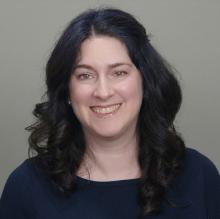
Katherine Patterson, MA, is a first-year doctoral student in the Ph.D. program in Counselor Education and Supervision at Immaculata University. Her research focuses on the preparation and training of counselors for work in forensic and correctional environments, as well as the effects of mandated treatment on the therapeutic relationship. Ms. Patterson also serves as an adjunct professor of psychology at Immaculata University and Southern New Hampshire University, where she teaches courses in research methods, personality psychology, and criminal psychology. Additionally, she works as a Forensic Intervention Evaluator and Substance Abuse Counselor with Rise Above, providing court-ordered evaluations and treatment in Montgomery County, PA. Ms. Patterson holds a Master of Arts in Forensic Psychology from Marymount University.